Department of the History of the Slovenian Language
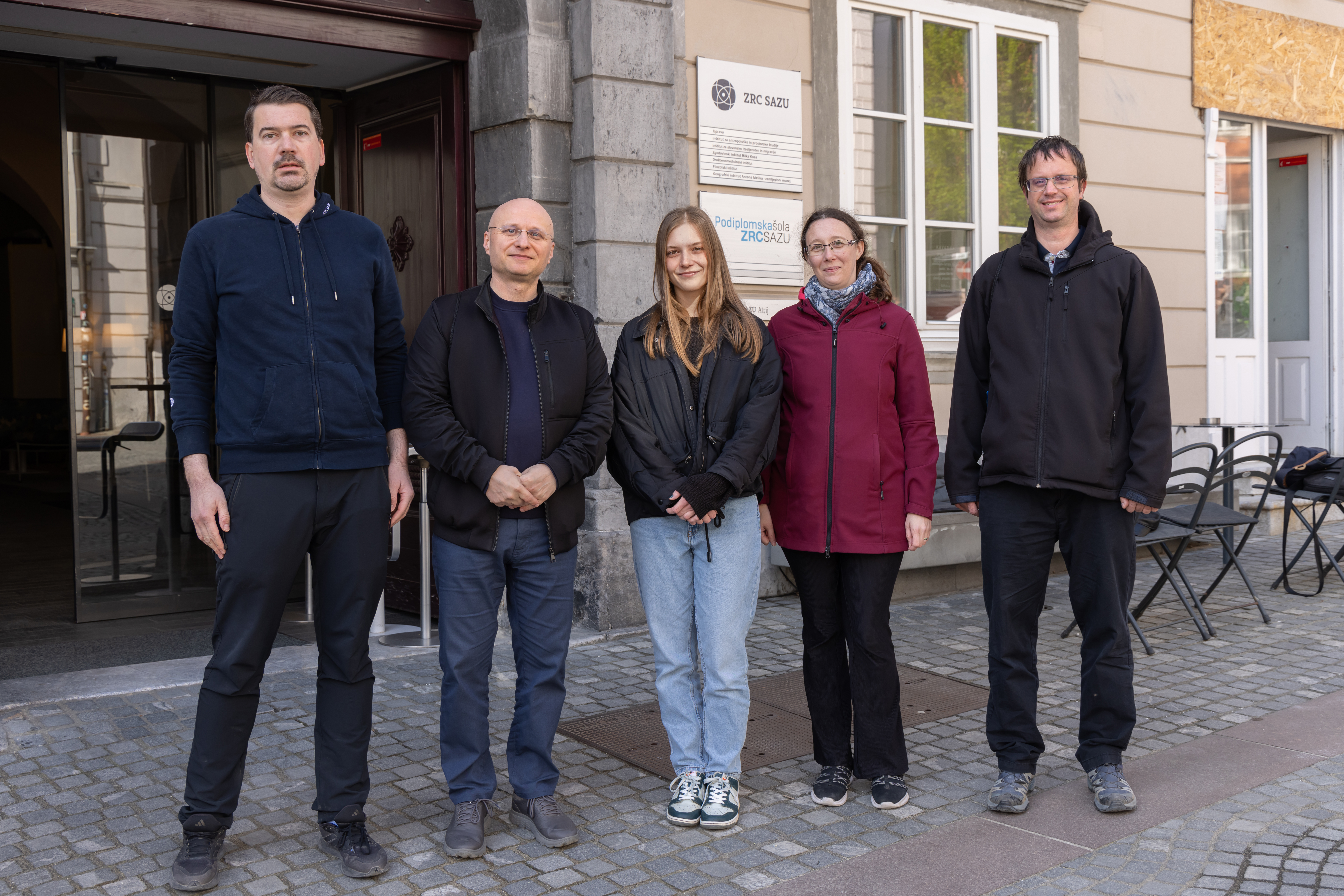
Head: Andreja Legan Ravnikar
+386 1 200 60 01
andreja.legan-ravnikar@zrc-sazu.si
Location: Wolfova 8, 2. nadstropje
Department Purpose and Activity
The department currently employs six researchers, who deal with dictionary entries and research on Slovenian in the past, especially written Slovenian of the sixteenth century. Language content is prepared for specialized users in linguistics and in literary and cultural history, and popular content is produced to inform general users. Members conduct research on historical lexicology and lexicography, historical morphology and word formation, historical terminology and phraseology, historical sociolinguistics, contact linguistics, the history of linguistics, and the history of written Slovenian from the sixteenth century to the end of the nineteenth century. Some members teach at the ZRC SAZU Graduate School, and they also frequently appear as guest lecturers in Slovenia and abroad.
Within the department, work is underway on a historical dictionary, Slovar slovenskega knjižnega jezika 16. stoletja (Dictionary of Sixteenth-Century Slovenian, 2021–; editors-in-chief of the first volume: Kozma Ahačič, Metod Čepar, Alenka Jelovšek, Andreja Legan Ravnikar, Majda Merše (retired), Jožica Narat (retired), France Novak (retired); abbreviated SSKJ16). In 2022, its first volume was adapted for online publication, thus becoming the foundation of the new, continuously growing dictionary eSSKJ16 (2022–). Since 2023, it has been expanded with new entries as part of the annual updates of the Fran web portal. From 2024 onward, the individual annual additions have also been available as e-books (Slovar slovenskega knjižnega jezika 16. stoletja 2024, 2025, etc.).
A member of the department is the editor-in-chief of the Fran and Franček language portals, and some members are involved in creating and improving the Fran portal and are in charge of visualization of historical language information. Members serve as editors and are on the editorial boards of Slovenian and international linguistics journals, and the institute’s book collection, and they are (co)editors of research volumes and scientific critical editions, selected works, and unpublished material from the estates of Slovenian linguists. They also compose the answers and serve on the editorial board for the Language Advisory Service, which operates under the auspices of the Department of Language Standardisation. One of the members writes grammars and textbooks for primary and secondary schools.
Within the department, some seminal works for Slovenian have been and are being created, including:
- A general explanatory historical dictionary: Slovar slovenskega knjižnega jezika 16. stoletja (A-D) (Dictionary of Sixteenth-Century Slovenian, A–D; 2021)
- Annual additions on the Fran web portal: Slovar slovenskega knjižnega jezika 16. stoletja 2023 (eSSKJ16, 2024–), Slovar slovenskega knjižnega jezika 16. stoletja 2024 (2025)
- Historical dictionaries and dictionary collections: Besedje slovenskega knjižnega jezika 16. stoletja (Vocabulary of Sixteenth-Century Slovenian, 2011, online 2014), Wortschatz der slowenischen Bibelübersetzungen des 16. Jahrhunderst (Vocabulary of Sixteenth-Century Slovenian Bible Translations, Biblia Slavica 2006), Slovensko-latinski slovar: po: Matija Kastelec – Gregor Vorenc, Dictionarium Latino-Carniolicum (Slovenian–Latin Dictionary Based on Dictionarium Latino-Carniolicum (1680–1710) by Matija Kastelec and Gregor Vorenc; 1997, online 2014), Slovensko-nemško-latinski slovar po rokopisnem slovarju Hipolita Novomeškega Dictionarium trilingue, 1711–1712 (Slovenian–German–Latin Dictionary Based on the Manuscript Dictionary Dictionarium Trilingue by Hippolytus of Novo Mesto, 1711–1712 (online 2022); Slovensko-latinsko-nemški slovar po: Hieronymus Megiser, Thesaurus polyglottus, 1603 (Slovenian–Latin–German Dictionary Based on Thesaurus Polyglottus by Hieronymus Megiser, 1603 (1977, online 2023)
- Language corpora: Korpus 16: Korpus besedil slovenskih protestantskih piscev 16. stoletja (Corpus 16: Corpus of Texts by Slovenian Protestant Writers of the Sixteenth Century, 2019)
- Online collections: Slovenske slovnice in pravopisi (Slovenian Grammars and Normative Guides, 2015), Corpus de textes linguistiques fondamentaux (Corpus of Seminal Linguistic Texts, 2014)
- Collector’s edition: Stati inu obstati: prvih petdeset slovenskih knjig (To Stand and Withstand: The First Fifty Slovenian Books, 2021)
Current Projects
Members of the department have been or are involved in the following programs and projects:
- Slovenian in Synchronic and Diachronic Development (January 1st, 2015 – December 31st, 2021)
- Development of Slovenian in the Digital Environment: Language Resources and Technologies (May 4th, 2020 – August 31st, 2022)
- Compilation of an alphabetical index of Hippolytus’s dictionary and its online publication (May 1st, 2022 – October 31st, 2022)
- Image–Word–Knowledge. The Life of Ideas between the Eastern Alps and the Northern Adriatic. 1400–1800 (January 1st, 2022 – December 31st, 2027)
- Preparing a Primer of Hippolytus’s Dictionary and Its Online Publication (May 1st, 2022 – October 31st, 2022)
- The History of Slovenian Literary Translation (September 1st, 2020 – August 31st, 2023)
- Slovenian Natural and Cultural Heritage
Media Presence
Achievements by members of the department also appear in the media, where they frequently present their work:
- "Jezik se lahko tudi poredi" (Language Can Also Fatten), guest appearance by Kozma Ahačič on the N1 podcast hosted by Suzana Lovec (2024)
- "Ko so prišli z nemščino v razred na slovenskem podeželju, se ni zgodilo nič" (When They Came into the Classroom with German in the Slovenian Countryside, Nothing Happened), interview with Andreja Legan Ravnikar for MMC RTV SLO (2024)
- "Dr. Kozma Ahačič," interview with Kozma Ahačič on the program Intervju (Interview) on TV Slovenia 1 (2023)
- "Dediščina reformacije: Avtoriteta argumenta, ne argument avtoritete!" (The Heritage of the Reformation: The Authority of the Argument, Not the Argument of Authority!), guest appearance by Kozma Ahačič and Andreja Legan Ravnikar on the television program Panoptikum on RTV SLO (2023)
- "Možgani in preklinjanje: Sto kosmatih nevronov!” (The Brain and Swearing: A Hundred Hairy Neurons!), guest appearance by Alenka Jelovšek on the radio program Frekvenca X (X Frequency) on Val 202 (2023)
- "Zakaj? Zato!" (Why? Because!), guest appearance by Maruša Žibred on the program Kulturni obzornik (Cultural Review) on Radio Študent (2023)
- "Povijesni rječnik za povijest" (A Historical Dictionary for History), a review of Slovar slovenskega knjižnega jezika 16. stoletja (2021) by Branka Tafra in the journal Slavistična revija (in Croatian, 2022)
- "Pozabljene slovenske besede" (Forgotten Slovenian Words), guest appearance by Metod Čepar on the television show Dobro jutro (Good Morning) on RTV SLO (2019)
- Guest appearances on the educational and historical TV documentary series (Ne)znana poglavja slovenske zgodovine ((Un)known Chapters from Slovenian History) on RTV SLO: “Gorske bukve” (The Vineyard Law Code; appearance by Alenka Jelovšek, 2022); “500 let rojstva Adama Bohoriča” (Five Hundred Years since Adam Bohorič’s Birth; Kozma Ahačič, 2021); “Oživljeni Vodnik” (Vodnik Revived; Andreja Legan Ravnikar, 2019)
- Guest appearances on the radio show Jezikovni pogovori (Language Conversations) on Radio Slovenia 3, Program ARS: "Kaj se lahko naučimo na primeru Apple?" (What Can We Learn from the Case of Apple?; appearance by Kozma Ahačič, 2024); "Ja, tudi beton lahko krvavi: izšel je Terminološki slovar betonskih konstrukcij" (Yes, Even Concrete Can Bleed: The Specialized Dictionary of Concrete Structures Has Been Published; Mitja Trojar, 2021); "Vodnik je prvi uvedel besedo slovar" (Vodnik Was the First to Introduce the Word slovar ‘Dictionary’; Andreja Legan Ravnikar, 2019); “Tikanje, vikanje, onikanje skozi čas” (Informal, Formal, and Ultra-Formal Address; Alenka Jelovšek, 2019); “Slovnica kot uspešnica” (Grammar as a Best Seller; Kozma Ahačič, 2017)
They also help create the Beseda tedna (Word of the Week) column in the print and online editions of the newspaper Delo.